

The AQUA VIVA filter by ART CARBON captures substances that conventional water treatment and purification plants are not designed to handle: residues of pharmaceuticals, hormones, pesticides, herbicides, fungicides and microplastics.
Tap water in the Czech Republic is among the most strictly monitored foodstuffs. Even so, in recent years there has been growing discussion about substances that enter the water cycle in such low concentrations that conventional treatment technologies cannot always reliably remove them. These are primarily so-called micropollutants: residues of pharmaceuticals, hormonal substances, pesticides, herbicides, fungicides, and also microplastics. It is precisely this new generation of pollution that the Czech technology developed by ART CARBON s.r.o., a member of the Czech Nanotechnology Industries Association, targets.
The European Union is already responding to the problem of micropollutants with new rules for the treatment of urban wastewater. The revised directive provides for the addition of a so-called quaternary treatment stage and also introduces systematic monitoring of microplastics and PFAS. The reason is clear: pollution that was previously not a major topic in the water industry is becoming one of the greatest challenges to water quality in Europe. In its report, the European Investment Bank warns that conventional wastewater treatment plants are unable to remove most micropollutants, which can therefore make their way back into the environment and the food chain.
ART CARBON offers a solution based on a patented adsorption material made from immobilised carbon nanotubes. The ART CARBON Process technology makes use of exceptionally rapid adsorption on the surface of nanostructured carbon. According to the company’s data, it works up to ten times faster than conventional activated carbon and is able to capture a broad range of organic contaminants even at very low concentrations.
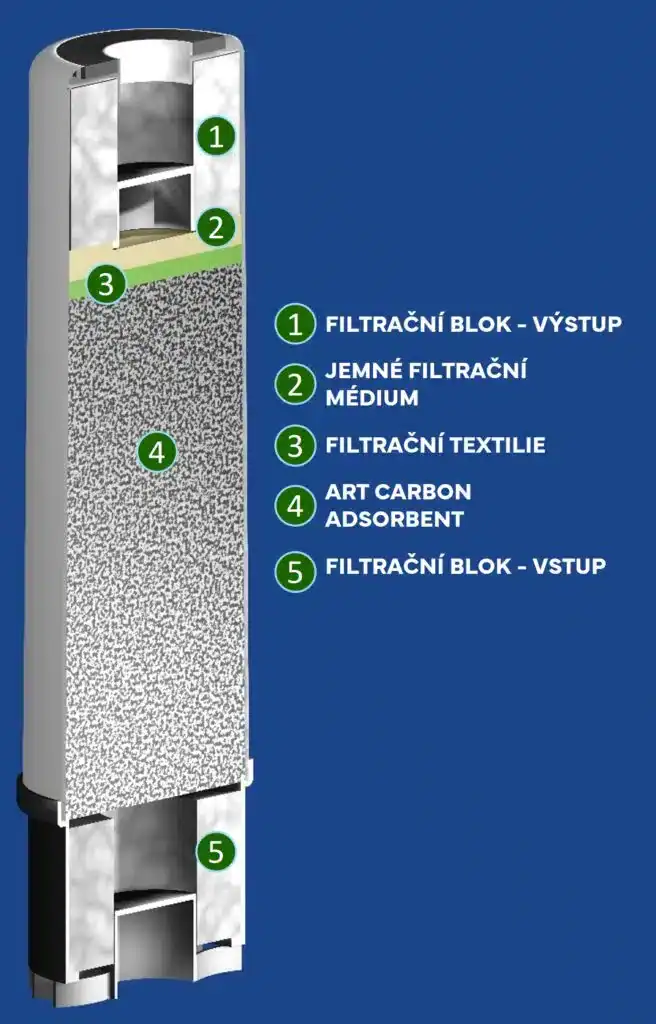
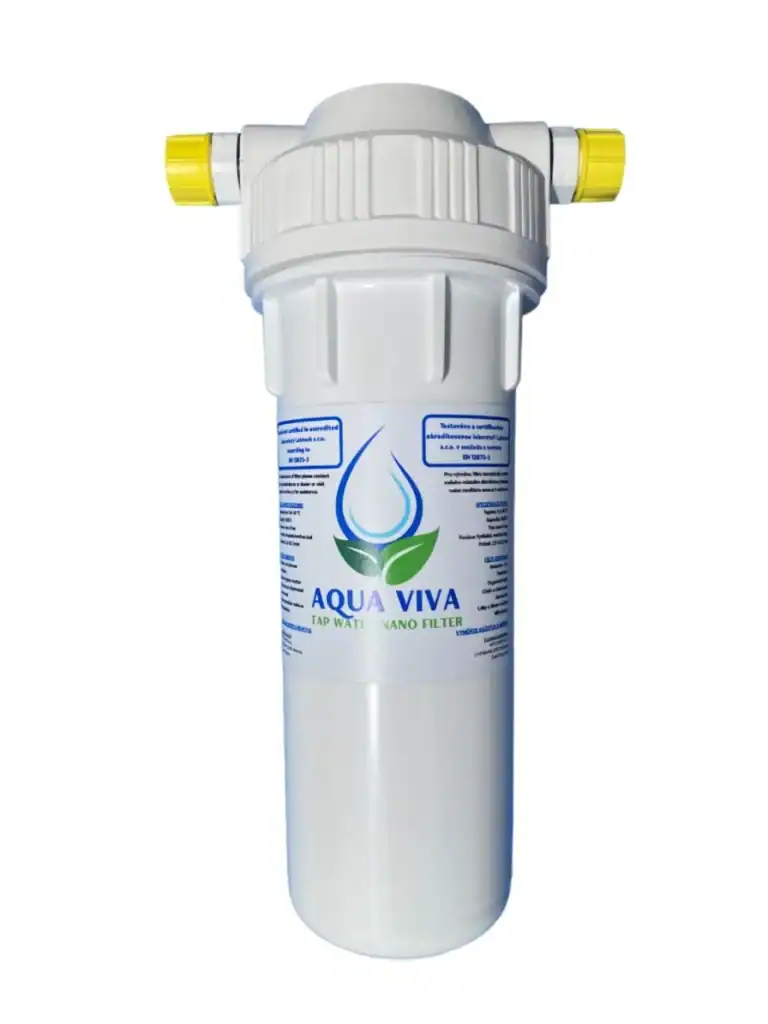
For households, the company has developed the under-sink AQUA VIVA filter, designed for the final polishing of tap water directly at the point of use. According to the manufacturer, the filter does not let through residues of pharmaceuticals, hormones, pesticides, herbicides, fungicides, microplastics or mechanical particles. At the same time, it preserves mineral content, removes unpleasant odours and is designed to maintain its effectiveness even at the standard water flow rate found in households.
“The quality of drinking water is no longer just a question of bacteria, chlorine or hardness. Substances that previous generations of water-industry technologies did not address at all are entering the water in tiny trace concentrations. Our goal is to give households a final protective barrier right before the glass of water,” says Rostislav Slevínský of ART CARBON.
The main difference compared with conventional filters lies in the speed at which contaminants are captured. According to ART CARBON, classic activated carbon requires a longer contact time with the water in order to adsorb chemical substances effectively. Thanks to its nanocarbon material, the AQUA VIVA filter works within a matter of seconds and, according to the manufacturer, retains its effectiveness even at a flow rate of 2.5 litres per minute.
“Micropollutants are exactly the kind of problem where Czech nanotechnology demonstrates its practical value. This is not a laboratory curiosity, but a technology that responds to a very specific everyday problem: just what might be in the water we drink,” adds Jiří Kůs, Chairman of the Czech Nanotechnology Industries Association
ART CARBON technology has applications not only in households, but also in the water industry, food production, industrial wastewater and water recycling. The company states that its solution is suitable for removing pesticide substances, pharmaceutical residues, drugs and other organic pollutants. The adsorbent can also be regenerated directly at the installation site, which reduces operating demands and limits the handling of large volumes of filter material.
The AQUA VIVA filter is thus an example of how Czech nanotechnology is making its way from laboratories into ordinary households. At a time when Europe is preparing to tighten the requirements for removing micropollutants from water, ART CARBON offers a technology that makes it possible to address part of the problem today – simply, right at the tap.


0 Comments