
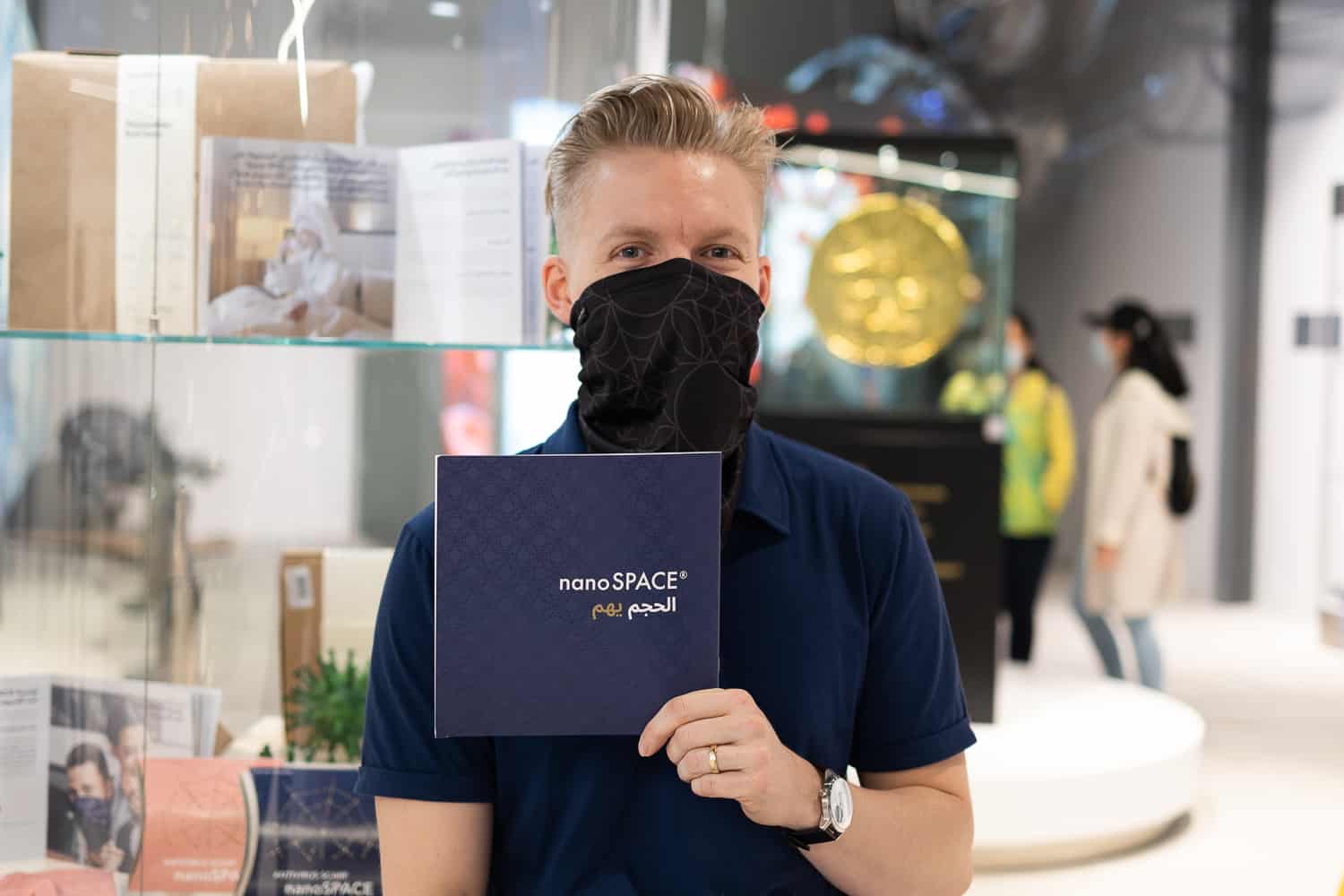
The New Year’s Eve celebrations in the Czech pavilion at the Expo 2020 world exhibition (Expo was postponed from 2020 to 2021, but the name Expo 2020 was retained) began by transforming the rotating exhibition into a showcase of Czech nanotechnology products and inventions. Visitors were thus able to enter the invisible world of nanotechnology, a field in which the Czechs excel.
What is already standard in the Czech Republic is only now being developed elsewhere in the world
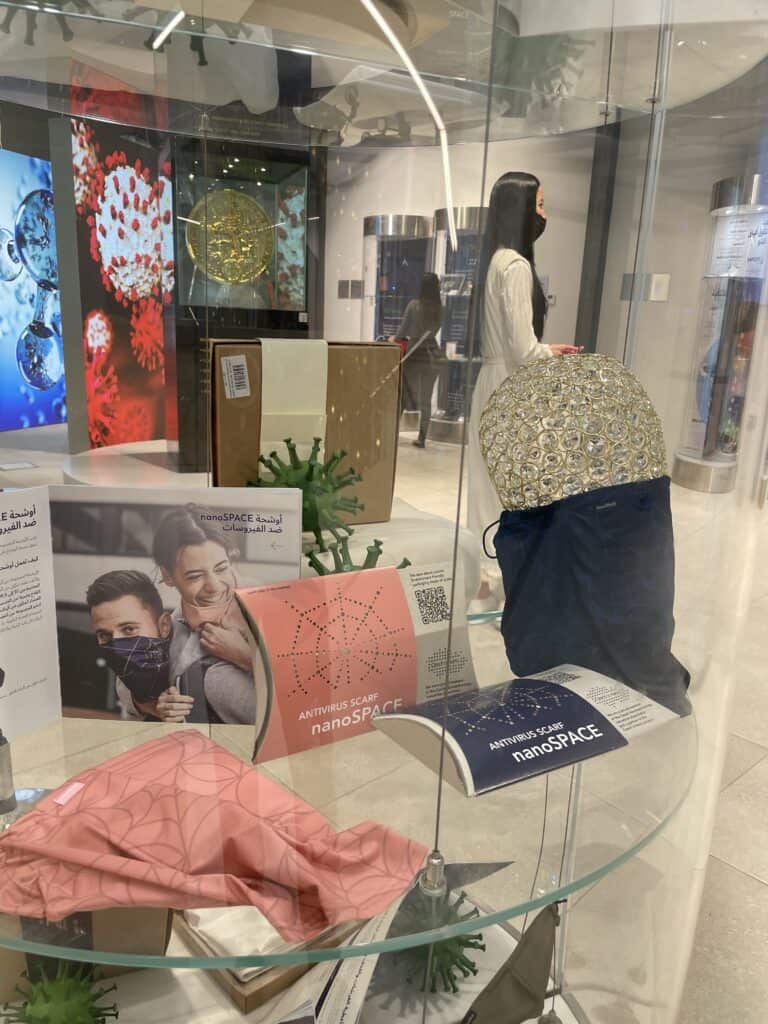
The exhibition also featured Czech nano face masks and nano scarves, which have become a symbol of the fight against coronavirus in the Czech Republic and, above all, a demonstration of Czech excellence in nanotechnology.
“What has become standard for Czech citizens over the past two years is still only at the research stage in other countries. Nano face masks are known only in the Czech Republic and South Korea. While Czech visitors are thoroughly familiar with nano face masks and nano scarves, foreign visitors marvel at them and are fascinated that something like this has long been available to buy here.” says Lucie Konečná, director of nanoSPACE. On display at the exhibition were Czech designer washable nano face masks and washable nano scarves, which in the Czech Republic are regarded as the equivalent of an FFP2 respirator.
The pillows and duvets of the future
The number of allergy sufferers is growing worldwide, and the use of nanofibre membranes in duvets and pillows is likely to become standard. “A nanofibre membrane can very effectively prevent dust mites and allergens from accumulating in the filling of pillows, duvets and mattresses; it is a simple mechanical protection against dust mites.” explains Jiří Kůs, chairman of the Czech Nanotechnology Industries Association. At first glance, pillows and bedding with a nanofibre membrane are indistinguishable from ordinary ones.
Nano window screens against smog
The world exhibition also drew attention to the Czech company Nafigate Park, which, among other things, makes window screens capable of filtering out smog. In large Asian cities these could replace traditional mosquito screens. In addition to smog, they can also filter allergens and other nanoparticles that occur in large quantities in major metropolises.
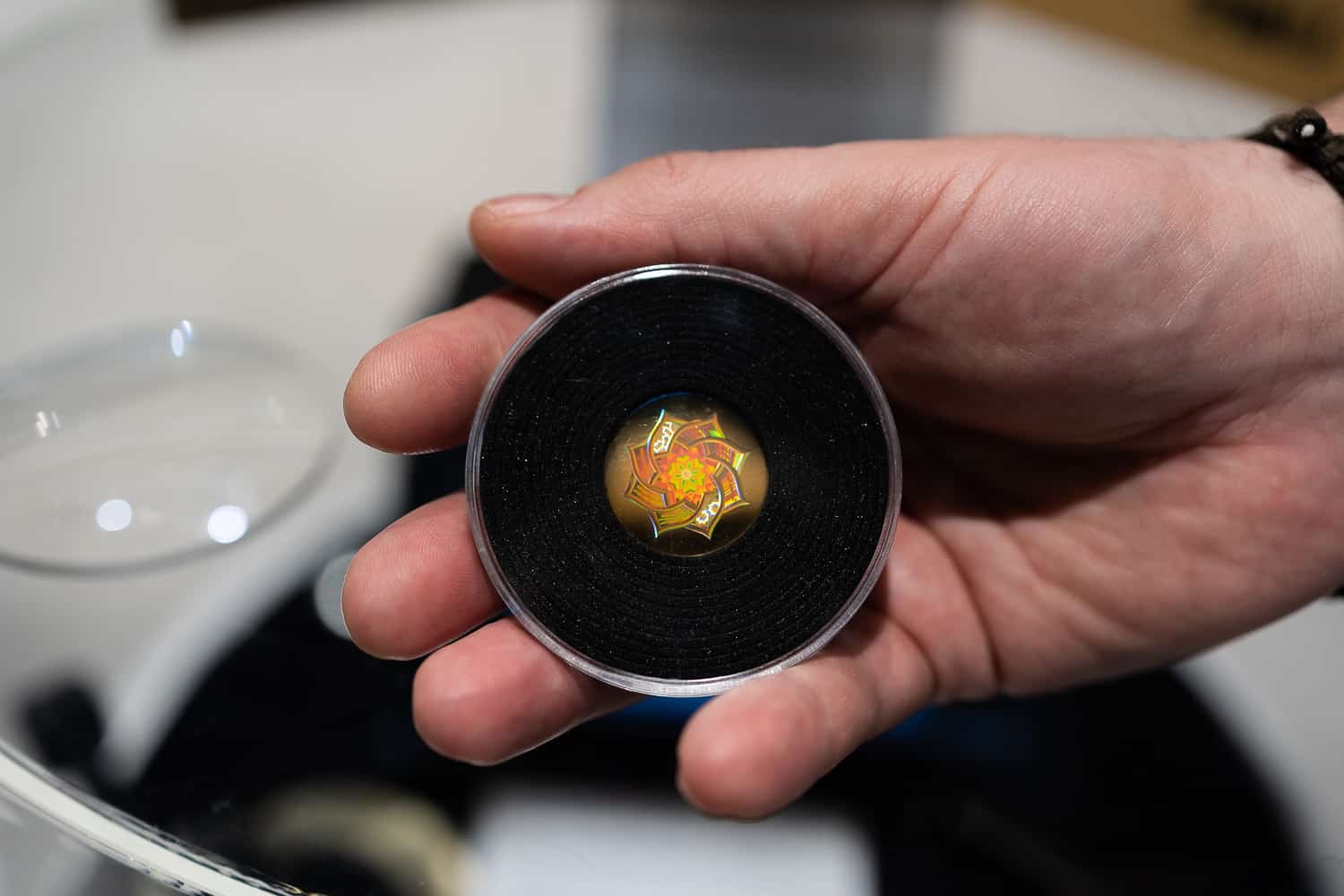
The permanent exhibition also included a presentation by IQ Structures, which develops and manufactures cutting-edge security features to protect banknotes, documents and valuables against counterfeiting. Especially for EXPO 2020, the company IQS Group created a miniature model of the Great Mosque of Al-Masjid al-Haram in Mecca the size of a grain of sand (≈0.5mm2). The shop in the Czech pavilion also offered a special EXPO 2020 hologram for sale, featuring motifs of Czech participation in the world exhibition, including special nanographic images of Prague and Dubai.
“IQ Structures’ nanostructures are produced at a resolution of tens of nanometres – to give you an idea: a model car made using this method has very precise shapes, yet you could park it on a human hair,” explains Jiří F. Potužník. “But for us it is not so much about another Czech – and in this case rather a world – record, but about demonstrating functional, innovative technology and original design, which is the original purpose of EXPO.”
Configure your own 3D snowflake
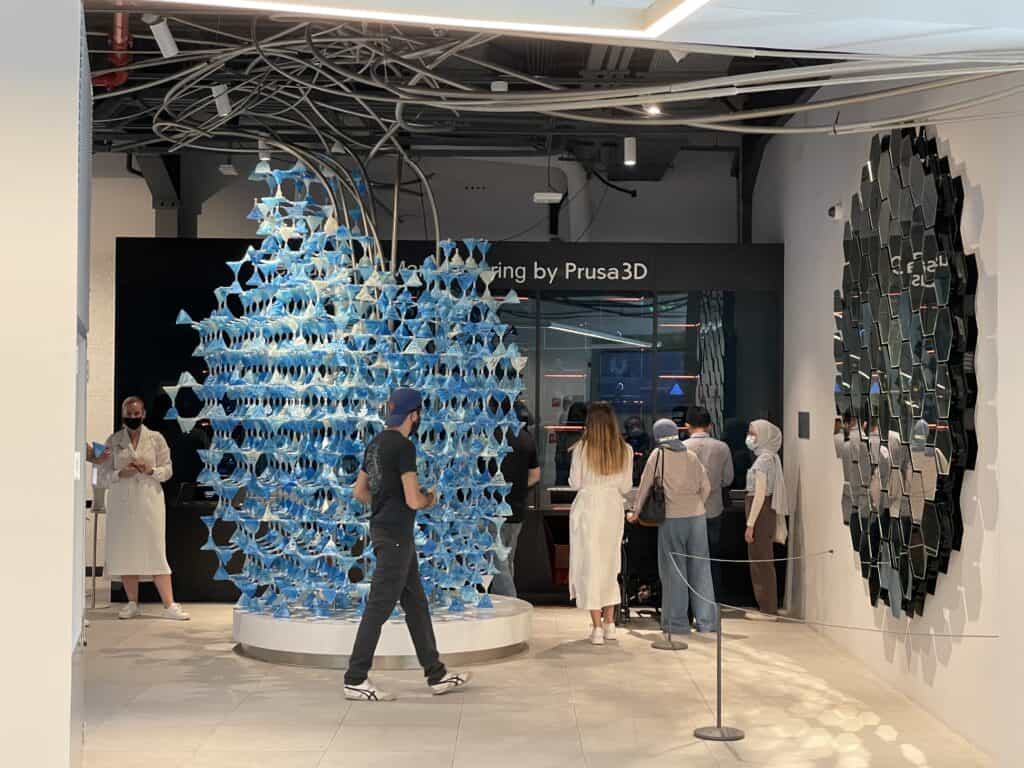
For visitors, the most entertaining part of the exhibition is surely the wall full of 3D printers, where they can configure and print their own 3D snowflake. This wall is part of the The Future of Manufacturing exhibit by Průša Research. Printing takes four hours, so you simply place your order in the morning and pick up your snowflake after lunch. You can then take it home as a souvenir or contribute to building a three-dimensional sculpture. This is reflected in an installation entitled Fluidum by Petr Vacek and Adam Cigler – a kinetic system of eighty-five robotically controlled mirrors that reshape the reflection of the viewer and their surroundings like a vertical water surface.
At the heart of the pavilion is a system that produces water from air
In January too, visitors were able to see the permanent exhibition, whose technological and exhibition core is the S.A.W.E.R system. This device, which independently produces water from air using nothing but solar energy, irrigates a garden planted in the Dubai sand and shows how to create an oasis in the desert.
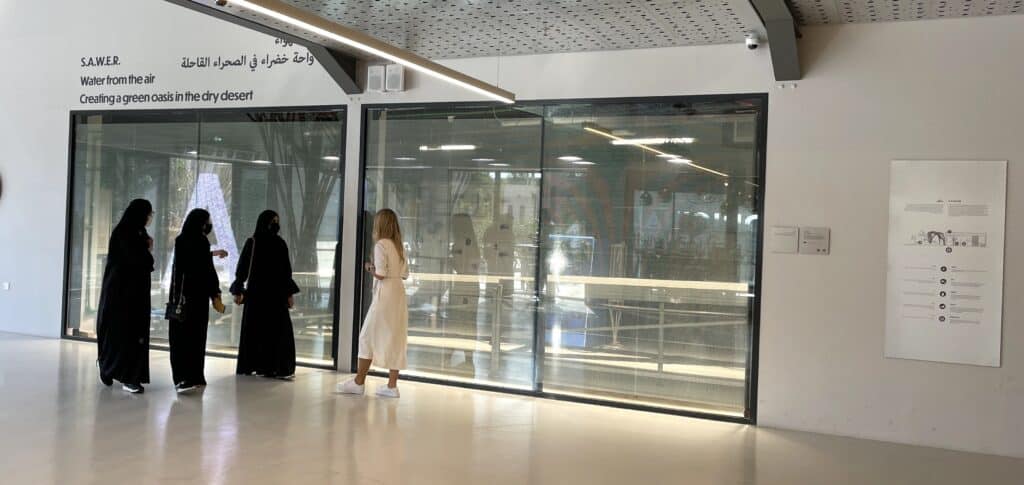
Visually the most beautiful is the installation by LASVIT
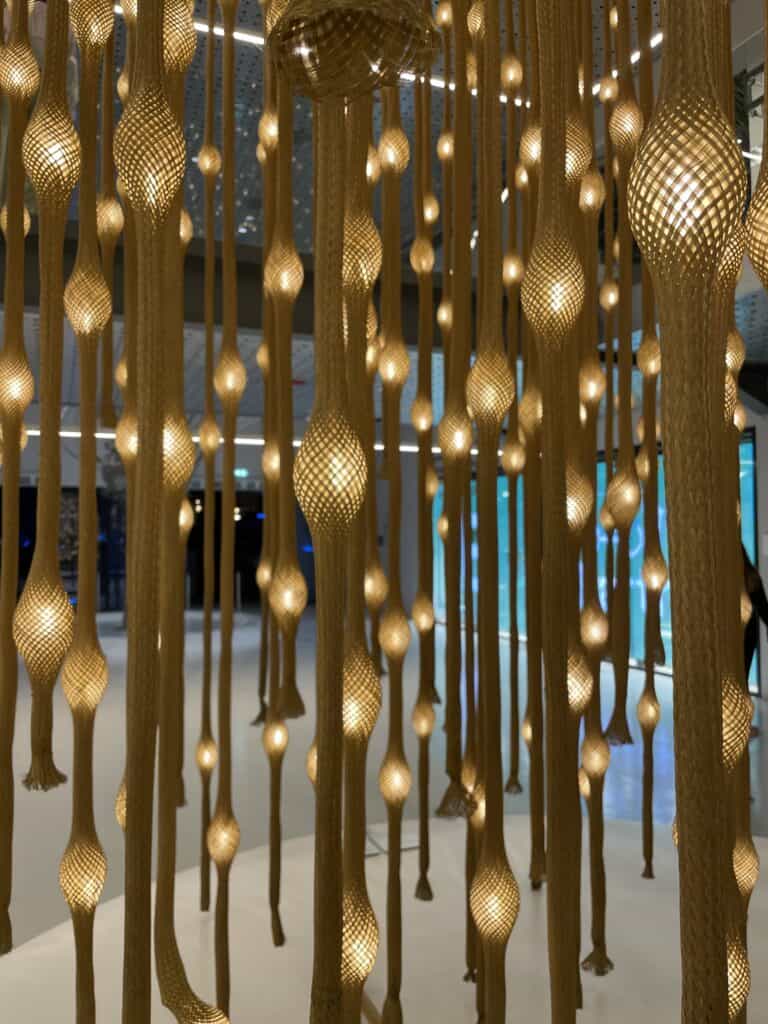
The Czech pavilion can also boast a magnificent, monumental, glowing installation by LASVIT, designed by Maxim Velčovský. The exhibit, entitled Golden Rain, is made of metal fibres and glass, combining traditional glassmaking with modern technology.
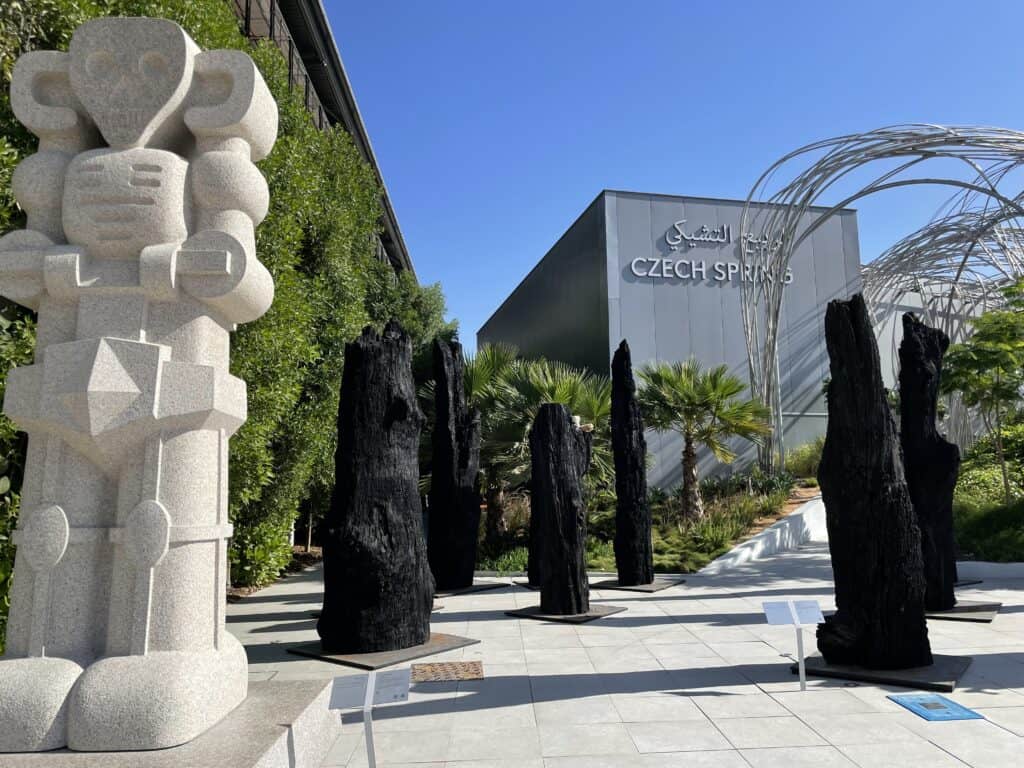
We concluded the presentation of Czech nanotechnology companies in Dubai at the world exhibition with an appearance on Dubai TV, in the largest television studio in the Middle East. We are delighted by the United Arab Emirates’ interest in Czech nanotechnology.
0 Comments